
Veo 3
Google DeepMind's Veo family — now Veo 3.1 — cinematic takes with native sound, on one canvas next to Sora 2, Kling, and Seedance.
The 23 models on this page are already included, with no separate subscription per tool. 14,500+ real generations already delivered on the platform. Updated
Cinematic motion
Veo 3.1, 8s
Long camera move
Veo 3.1, 8s aerial
Native audio
Veo 3.1, 8s with sound
The most cinematic take in the field
Veo's reputation is image quality: film-grade light, coherent long moves, and color that looks graded out of the box.
Google Veo 3 brought native audio; Veo 3.1 sharpened detail and control — and that is the version running on this page.
Every clip here is a live Veo 3.1 generation from FluxoKit, tier and length in the caption.

Long camera move
Veo 3.1, 8s aerial
Three ways to direct Veo 3
Powered by Veo 3.1 on the FluxoKit canvas — no Google AI Studio setup, no separate subscription.
Text to video
Write the shot like a brief: subject, camera move, light, and the sound underneath. Veo returns a graded-looking take.
Image to video
Start from a still — a product hero, a storyboard frame — and Veo animates it while holding the composition.
Frames to video
Give a first and last frame and Veo builds the coherent move between them — storyboard control without a rig.
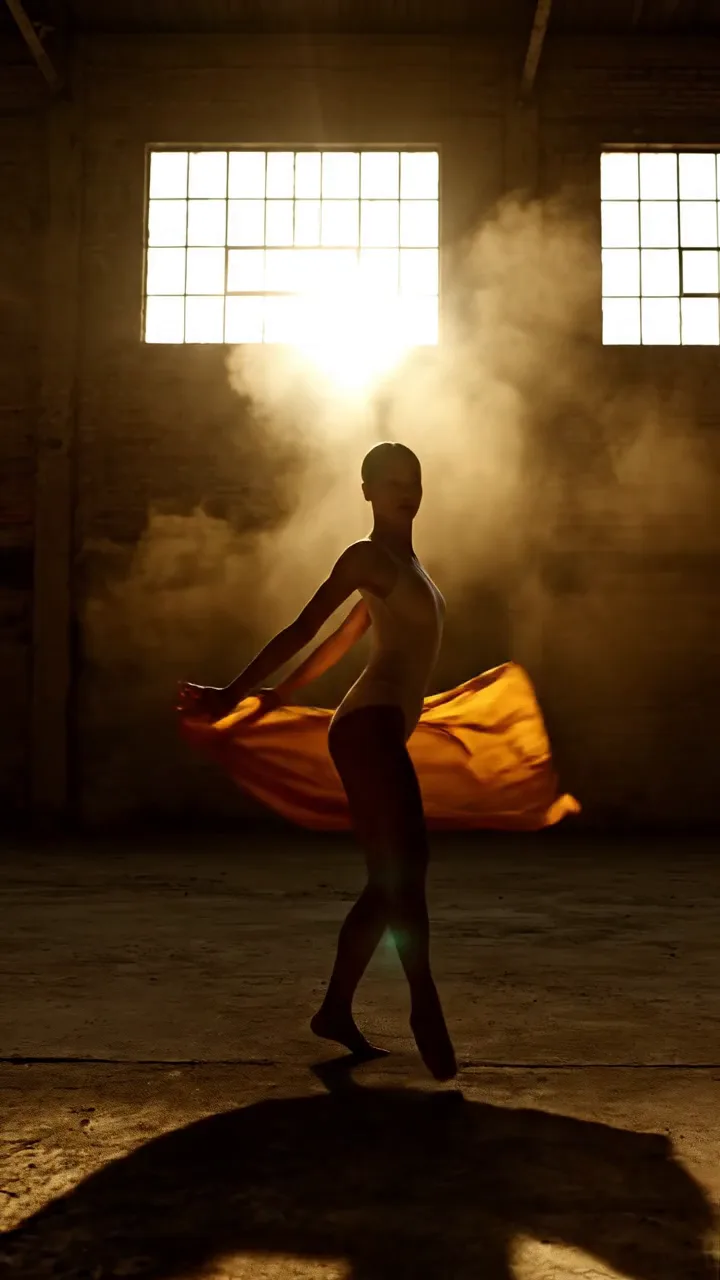
Cinematic motion
Veo 3.1, 8s
Long camera move
Veo 3.1, 8s aerial

Native audio
Veo 3.1, 8s with sound
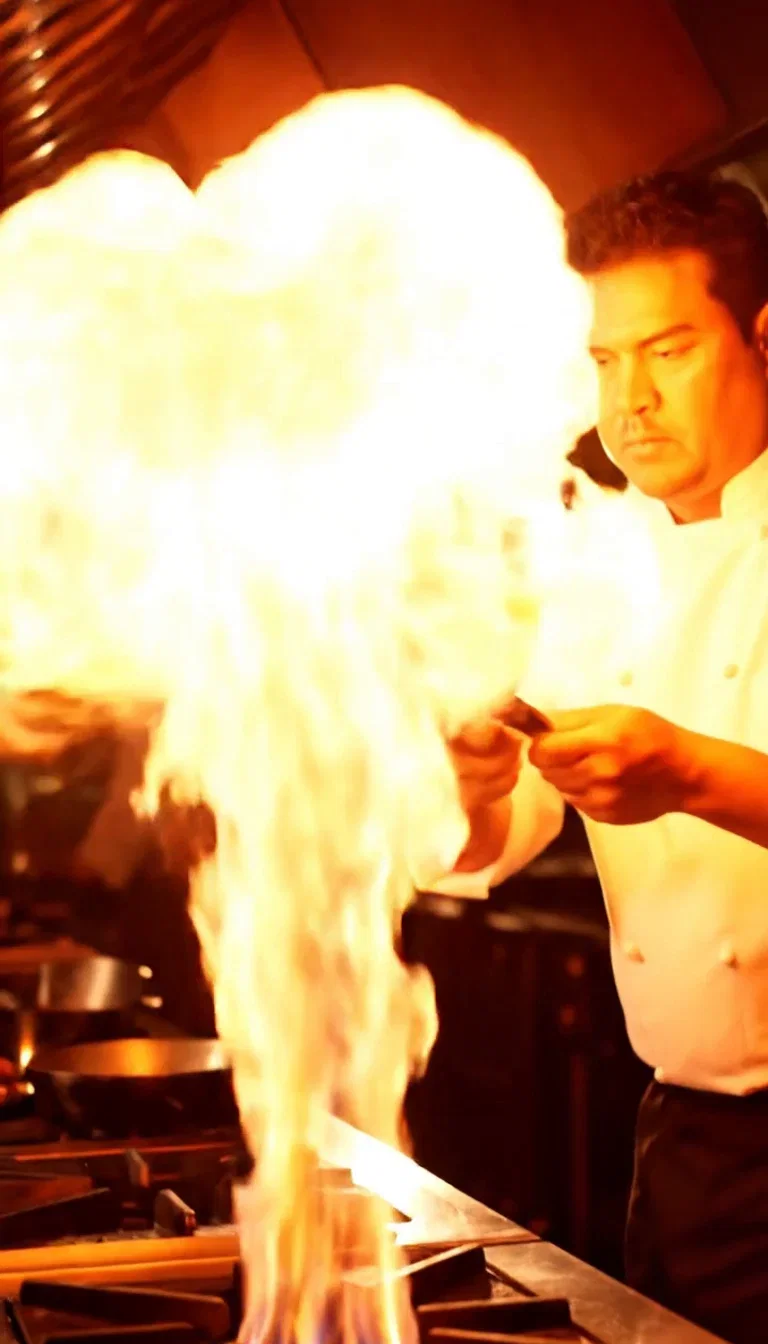
Fire
Flambe beat

Scale
Viaduct beat
Sound born in the scene
The flame bursts and you hear the whoosh; the kitchen hums underneath — one generation, no sound pass.
Veo 3's native audio makes b-roll usable straight out of the model for reels, ads, and product intros.
Describe the sound the way you describe the shot, and it arrives synchronized.
Native audio
Veo 3.1, 8s with sound
Motion that stays coherent
Long moves are where video models fall apart — limbs drift, fabric forgets its physics, faces melt between frames.
This strip freezes three beats of one Veo 3.1 spin: wind-up, spin, release — same dancer, same silk, same light.
That coherence is what separates a usable campaign take from a lucky loop.
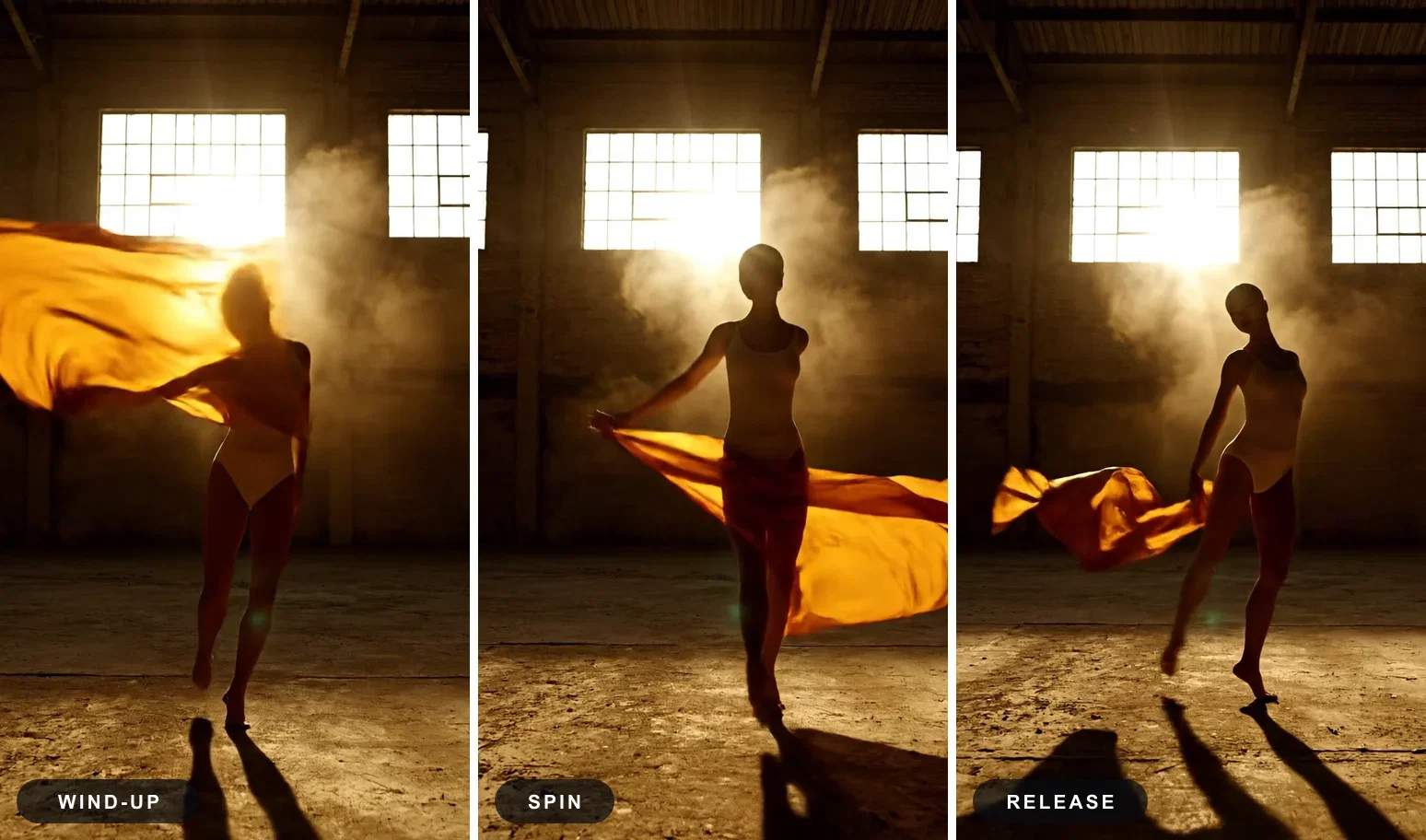
One take, three beats
Coherent motion
One canvas, every engine
135+
AI models in one canvas
3
live Veo 3.1 takes on this page
14,500+
real generations delivered
Real Veo 3.1 generations
Beat frames pulled straight from this page's takes — kitchen fire, alpine steel, warehouse silk.
Cinematic motion
Veo 3.1, 8s
Long camera move
Veo 3.1, 8s aerial
Native audio
Veo 3.1, 8s with sound
How to use Veo 3 on FluxoKit
Brief the shot
Subject, move, light, sound — plain language, written like you would brief a DP.
Generate and compare
Run Veo 3.1, then the same prompt on Sora 2 or Kling. Keep the take that sells the idea.
Cut for every channel
Pull beat frames for thumbnails, caption the cut, and version it per placement on the same canvas.
Veo 3 is Google DeepMind's video model — the most cinematic take in the field, with sound generated natively inside the scene. FluxoKit runs Veo 3.1 on one canvas next to Sora 2, Kling, and Seedance, with no AI Studio setup. Every clip on this page is a live Veo 3.1 generation.
When people search for veo 3 or google veo, they are usually past curiosity: they want to use it, and they want to know if it beats Sora for their work. This page answers with live takes and a workflow, not a spec sheet.
Direct Answer
Use Veo 3 when the shot has to look filmed and graded: hero placements, brand films, product intros, anything watched full-screen. Its native audio means b-roll arrives ready for social. Use it on FluxoKit when you want that without the console setup — and when the honest comparison ("Veo or Sora?") should be settled by running both on the same brief.
Pick by job:
- Veo 3.1 — cinematic hero shots, long coherent moves, graded color out of the box.
- Compare with Sora 2 — when synchronized dialogue-heavy scenes or physics-critical action lead the brief.
What Veo 3 Is Best At
Three strengths define it. The cinema look: film-grade light and color that skips the "AI render" tell. Native audio: the scene's own sound — fire, steel, room tone — generated in the same pass. Coherent motion: long camera moves and fabric physics that hold together, which is exactly what the three-beat spin strip above demonstrates from a single take.
How to Use Veo 3 on FluxoKit
- Open the canvas and pick Veo 3.1 from the model picker.
- Brief the shot like you would brief a DP: subject, move, light, and the sound underneath.
- Generate, then run the same brief through Sora 2 or Kling for the honest comparison.
- Iterate — tighter move, new ending — until it is the take you ship.
- Pull beat frames for thumbnails and version the cut per channel, all on the same canvas.
Veo 3 vs the Field
Veo 3.1 leads on cinematic polish and long coherent moves. Sora 2 answers with synchronized audio scenes and contact physics. Kling owns fast action motion; Seedance owns vertical social volume. Production teams run two or three engines per campaign — the argument for one canvas over four subscriptions.
Related workflows
- AI Video Generator — every video engine on one page.
- Sora 2 — the head-to-head everyone asks about.
- Veo 3.1 model reference — specs, versions, and technical notes.
Why run Veo 3 on FluxoKit
The model is Google DeepMind's. The workflow — comparison, frames, iteration, export — is what FluxoKit adds.
No Studio setup
Skip the console and quota dance. Pick Veo 3.1 on the canvas and the first take is minutes away.
Cinema look by default
Graded-looking color, believable light, coherent long moves — the hero-shot engine of the field.
Audio in the take
Native sound arrives synchronized with the scene, so social cuts ship without a foley pass.
Compare against the field
Same brief through Sora 2, Kling, and Seedance next to Veo — judged on takes, not marketing.
From take to campaign
Beat frames become thumbnails; the cut becomes an ad; the ad becomes five placements — one canvas.
30-day guarantee
Generate real work for 30 days. Refund requests are governed by the first-subscription guarantee and Refund Policy.
23 models available in the canvas
Every model below is live in the FluxoKit studio. Each link opens its technical page with parameters, limits, and real generation examples.
- 01

Grok Imagine Video (Text to Video)
xAI · Video generation
- 02
Grok Imagine Video 1.5 (Reference)
xAI · Video generation
- 03

Veo 3.1 Text to Video
Google AI · Video generation
- 04
Gemini Omni Flash T2V
Google AI · Video generation
- 05
Gemini Omni 1.1 Flash Text to Video
Google AI · Video generation
- 06

Wan 3.0 Text to Video
Alibaba Cloud · Video generation
- 07
Wan 2.5 Text to Video
Alibaba Cloud · Video generation
- 08
Wan 2.6 Text to Video
Alibaba Cloud · Video generation
- 09
Wan 2.7 Text to Video
Alibaba Cloud · Video generation
- 10
HappyHorse 1.1 Text to Video
Alibaba Cloud · Video generation
- 11
HappyHorse Text to Video
Alibaba Cloud · Video generation
- 12

Sora 2
OpenAI · Video generation
- 13
Sora 2 Pro
OpenAI · Video generation
- 14

FLUX 3 Text to Video
Black Forest Labs · Video generation
- 15

MiniMax H3 T2V
MiniMax · Video generation
- 16
MiniMax Hailuo T2V
MiniMax · Video generation
- 17
Kling 2.6 Pro T2V
Kling · Video generation
- 18

Kling 3 T2V
fal.ai · Video generation
- 19

Seedance 2.0 T2V
ByteDance · Video generation
- 20

Seedance 2.5 Text to Video
Higgsfield AI · Video generation
- 21
Seedance 2.0 Fast T2V
ByteDance · Video generation
- 22
Seedance v1.5 Pro T2V
fal.ai · Video generation
- 23
Pixverse v6 T2V
fal.ai · Video generation
Frequently asked questions
What is Veo 3?
Veo 3 is Google DeepMind's video generation model, known for the most cinematic image quality in the field and for native audio — sound generated inside the same take. Veo 3.1 is the current version, with sharper detail and better control, and it is the tier running on this page.
What is the difference between Veo 3 and Veo 3.1?
Veo 3 introduced native audio and the cinematic look. Veo 3.1 is the refinement: crisper detail, stronger prompt control, and better handling of long camera moves and frame-to-frame coherence. On FluxoKit you simply pick Veo 3.1 from the model picker.
How do I use Google Veo without AI Studio?
On FluxoKit there is no Google AI Studio project, no API key, and no quota console: open the canvas, pick Veo 3.1, and describe the shot. The same canvas runs Sora 2, Kling, and Seedance, so one account covers the whole comparison.
Does Veo 3 generate sound?
Yes — natively. The flame whooshes, the train rumbles, the room breathes, all generated with the scene in one pass. For most social cuts that means no separate sound design step.
Is Veo 3 free to use?
FluxoKit does not sell a free trial. Veo 3.1 runs inside the platform plan from $14/month with monthly credits, backed by a 30-day first-subscription satisfaction guarantee, subject to the Refund Policy: direct real takes for a month, and refund requests are governed by the first-subscription guarantee and Refund Policy.
Next step
Access 135 AIs in one canvas, without subscribing to each one.
Monthly credits with no separate subscription per model. New purchases are temporarily unavailable; contact support for billing help.
VEO 3 ON FLUXOKIT
Direct your first Veo take
Veo 3.1's cinematic takes with native sound, next to the rest of the video field — one canvas, one plan.